
Home Automation
Home Automation Foundation Course
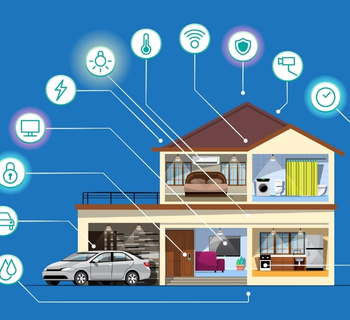
Start Your Smart Home the Right Way. This is your first step into a smarter, more convenient home. This course cuts through the confusion of all the different brands and apps. We'll show you how to start with simple, reliable devices (like smart plugs and bulbs) and control them easily from your phone or with your voice using Google Home and Amazon Alexa. This is all about making your home work for you, one room at a time.
- Master the Basics of a Connected Home. You will gain practical skills in:
- Understanding the "Hubs": Learn what "smart hubs" like Amazon Echo (Alexa) and Google Nest (Google Assistant) do and how to choose the right one for you.
- Wi-Fi Devices: Learn to safely install and set up the most common "no-hub-required" devices, including smart plugs, smart bulbs, and smart switches.
- Voice Control Mastery: Go beyond just "turn on the light." Learn to create "Routines" and "Scenes" (e.g., a "Good Morning" routine that turns on your lights, reads the weather, and starts your coffee maker).
- Simple Scheduling: Learn how to use apps to set schedules for your devices to save energy and improve security (e.g., make lights turn on at sunset).
- Smart Security Basics: Understand how to set up simple smart security devices like Wi-Fi cameras and door/window sensors for basic peace of mind.
- Build Your Smart Home in One Weekend. Our program is designed for total beginners:
- Follow-Along Setup: Our video guides walk you through the exact unboxing, installation, and app setup for popular, recommended devices.
- App-Based Learning: Almost the entire course is taught from your smartphone. You'll master the Google Home and Alexa apps inside and out.
- Scenario-Based Projects: You'll complete practical projects like, "Create a 'Movie Night' Scene" (dims lights, turns on TV) and "Automate Your Porch Light."
- Troubleshooting Guide: Learn to solve the #1 problem beginners face: what to do when a device "falls off" your Wi-Fi network.
- No! This Course Is for Absolute Beginners. This course is perfect for:
- Homeowners who just received an Alexa or Google Home as a gift.
- Anyone curious about smart devices but overwhelmed by the options.
- Renters who want simple, non-permanent ways to automate their apartment. All you need is a smartphone and a home Wi-Fi network.
A Convenient, Voice-Controlled Home. By the end of this course, you will have a "connected" home. You'll be able to control your lights, appliances, and more using just your voice or a single app. You'll have created powerful routines that save you time and effort every single day, and you'll have a perfect foundation to move on to our Intermediate course if you choose.
Home Automation Intermediate Course
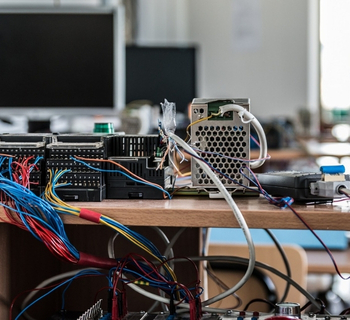
Go from Integrator to Engineer. This is where you go "off-label." The intermediate course taught you to use Home Assistant to connect existing devices. This advanced course teaches you to build your own custom devices, write your own scripts, and integrate any API. You'll move beyond what's available in the box and learn to make anything smart, secure, and automated.
- Become a Custom Automation Architect. You will gain elite-level skills to solve any automation challenge:
- Custom Hardware & Firmware: Master ESPHome to build your own custom, Wi-Fi-enabled sensors and controllers from cheap microcontrollers (like the ESP32) that integrate directly with your hub.
- Advanced Scripting: Write powerful, custom Python scripts and Jinja2 templates within Home Assistant to handle complex logic that the UI can't.
- API and Webhook Integration: Learn to read API documentation and integrate "unsupported" web services (like your power company's data, a public transit schedule, or a weather API) to trigger automations.
- Secure IoT Networking: Design and implement a secure home network. You'll learn to use VLANs to isolate your insecure IoT devices from your personal computers, protecting your data.
- Data and Analytics: Store your home's sensor data (like energy use or temperature) in a long-term database (like InfluxDB) and create powerful analytics dashboards with Grafana to find patterns and optimize your home.
- Solve Problems, Don't Just Connect Devices. This program is structured to develop expert-level problem-solvers:
- Microcontroller & Soldering Lab: Get hands-on with breadboards, sensors, and basic soldering to build your own multi-sensor from scratch using ESPHome.
- Code-Driven Projects: A heavy focus on writing code. You will complete projects like "Build a physical dashboard with custom buttons" and "Write a Python script to control your AC via its unofficial API."
- Network Security Module: A practical module on setting up a pro-level router and firewall to create a rock-solid, secure smart home network.
- Capstone Project: Design a complete, custom automation solution for a "client" (or your own home) that includes a network diagram, custom hardware, and advanced scripting.
- This Is an Expert-Level Program. This course is for those with a proven, strong foundation. We require:
- Completion of our Intermediate Course (or a portfolio to prove deep Home Assistant mastery).
- Basic Programming/Scripting: You must be comfortable with the basics of a language like Python. You should understand variables, functions, and 'if' statements.
- Strong Networking Knowledge: You must understand IP addresses, subnets, and firewalls, and be comfortable configuring a router's admin panel.
- You must be willing to (safely) work with low-voltage electronics.
- Turn Your Passion into a Profession. Completing this course positions you as a high-end specialist. You will receive an Advanced Home Automation Specialist Certificate and will be qualified for roles such as:
- Professional Smart Home Integrator
- Custom Automation Consultant
- Smart Home Security Specialist
- Starting your own custom installation business for high-end residential or commercial clients.
Home Automation Professional Course
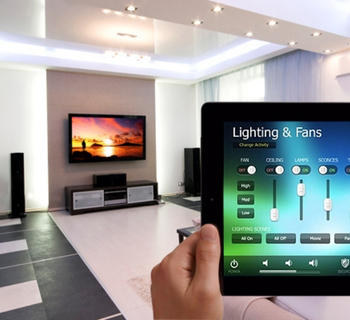
This is not just a hobbyist workshop; it is an industry-aligned program designed to turn you into a Smart Home Architect. While others teach you to blink an LED, we teach you to build scalable, secure, and market-ready automation ecosystems. We bridge the gap between basic electronics and commercial-grade IoT solutions, focusing on reliability, energy efficiency, and seamless user experience.
You will gain end-to-end expertise in hardware and software integration:
- Core Hardware Control: Master the ESP32 and ESP8266 platforms to control high-voltage AC appliances securely using relays and triacs.
- Wireless Protocols: Deep dive into Wi-Fi, Bluetooth, and MQTT protocols for instant device communication.
- Voice Intelligence: Integrate your devices with Amazon Alexa and Google Assistant for hands-free voice control.
- Custom Mobile Apps: Build your own dashboard apps (using platforms like Blynk, IoT Cloud, or custom APIs) to monitor and control homes remotely from anywhere in the world.
- Smart Sensing: Implement motion, temperature, and gas sensors to create "if-this-then-that" intelligent automation triggers.
We believe in a "Lab-to-Market" approach.
- Research Phase: You will analyze existing smart devices in the market to understand their architecture, component choices, and cost-efficiency.
- Production Phase: You won't just build on breadboards. You will learn the workflow of creating a finished product—from circuit design and PCB layout to 3D-printed enclosure concepts. We focus on writing efficient, "production-grade" code that doesn't crash, ensuring the systems you build are reliable enough to be installed in a client's home.
- Basic Electronics: A fundamental understanding of voltage, current, and basic components (resistors, LEDs).
- Programming Basics: Familiarity with C/C++ or previous experience with the Arduino IDE is recommended but not mandatory (we cover the essentials).
- Hardware: A laptop and our standard IoT Starter Kit (included or specified in the syllabus).
The smart home market is booming, opening diverse career paths:
- Home Automation Entrepreneur: Start your own business installing custom smart home solutions for residential clients.
- IoT Product Developer: Design and engineer new smart devices for tech companies.
- Embedded Systems Engineer: Work on the firmware and hardware logic that powers connected devices.
- Smart Building Consultant: Advise architects and builders on integrating automation into new construction projects.